
Post-COP Workshop on Customary Tenure Rights & Agroecology
The Post-COP Workshop on Customary Tenure Rights and Agroecology brought together an inspiring mix of policymakers, researchers, youth innovators, artists, and community organizers from across Eastern Africa. Building on the energy of the earlier High-Level Regional Policy Conference, the workshop created a space for reflection, learning, and collaboration on how to translate policy commitments into meaningful community action.
Over two days, participants explored the connections between storytelling, digital advocacy, art, and grassroots mobilization in advancing land justice and sustainable agroecology. The discussions underscored that achieving climate and land resilience is not only about science and policy but also about culture, creativity, and community engagement.
A strong focus was placed on impactful storytelling as a tool for transformation. Participants shared how personal and community stories — from farmers restoring degraded soils to women defending ancestral land — can powerfully shape perceptions and influence decision-making. Storytelling humanizes policy and ensures that development remains connected to real people and lived experiences.
Digital advocacy also featured prominently. Discussions highlighted the growing importance of technology and data in supporting fair land governance. Open data systems, mapping tools, and community-based digital platforms were recognized as powerful enablers of transparency and accountability. Yet, participants agreed that for these tools to reach their full potential, there must be continuous investment in digital literacy and inclusion, particularly at the community level.
One of the most memorable moments of the workshop came through art and performance. A short play on land rights was presented, offering a creative and emotional perspective on the struggles and hopes surrounding customary tenure in Africa. The performance sparked thoughtful conversations about the role of art in advocacy and public education.
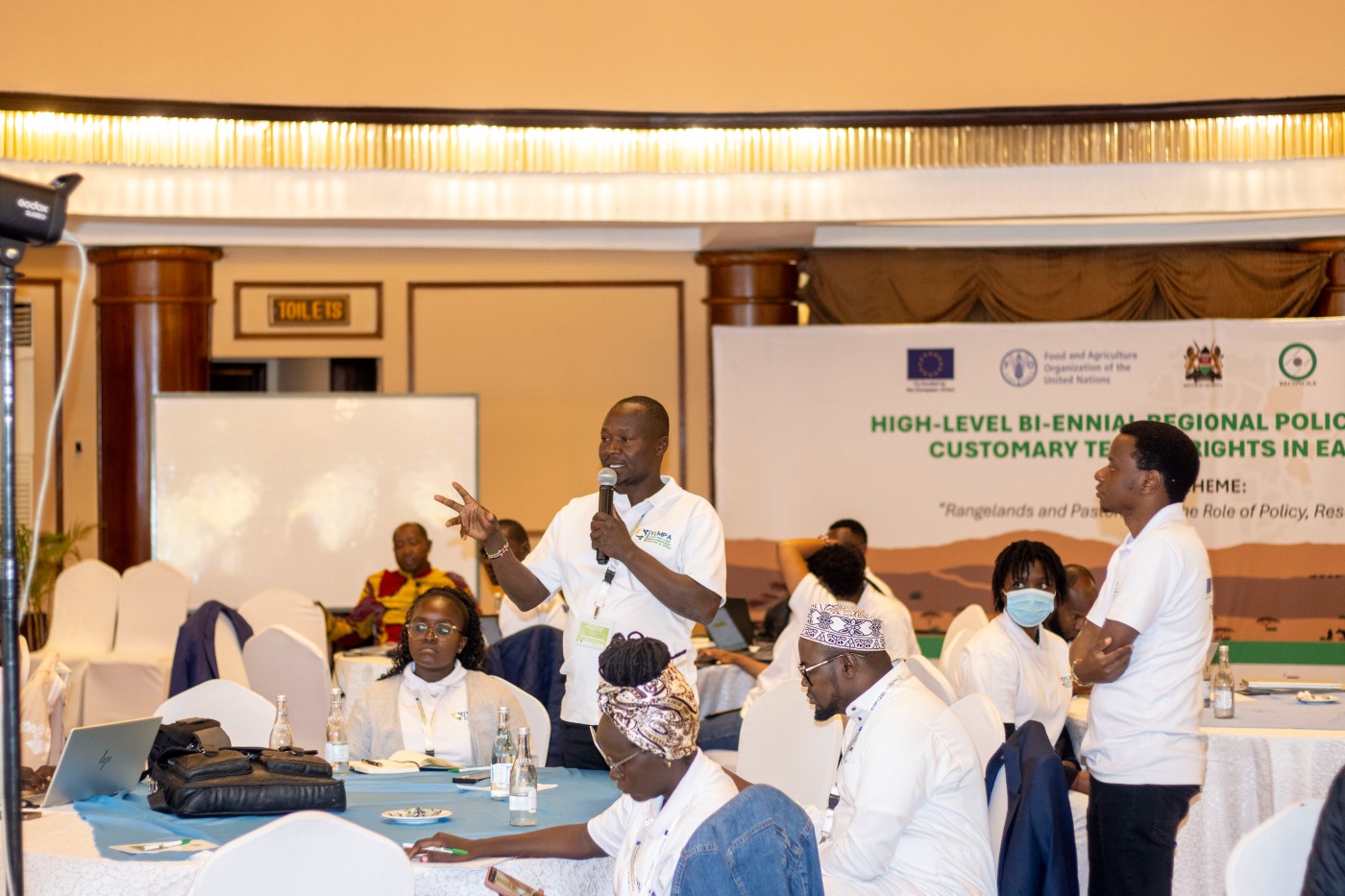
A Tembea Futures Institute member suggested that such plays could be adapted and presented in schools during the Kenya National Drama Festivals, helping to raise awareness among students and communities on land, justice, and environmental stewardship. The idea resonated widely, as participants reflected on how creative arts can make complex topics relatable and inspire young people to become informed advocates for sustainable land use.
Throughout the sessions, grassroots mobilization remained a key theme. Speakers emphasized that real transformation happens when communities lead the process. Local farmers, youth groups, and women’s cooperatives are central to implementing agroecological practices that preserve ecosystems and improve food systems. Strengthening these community networks and connecting them to supportive policies was seen as essential for lasting impact.
The workshop ended on a high note, with participants expressing optimism and a renewed commitment to keep the conversations alive beyond the conference halls. The mix of data, dialogue, creativity, and local leadership illustrated that lasting change is possible when innovation and human connection meet.
The Post-COP Workshop served as a powerful reminder that the future of land and climate justice depends on more than policy — it depends on people, their stories, their art, and their collective action to care for the planet and one another.


