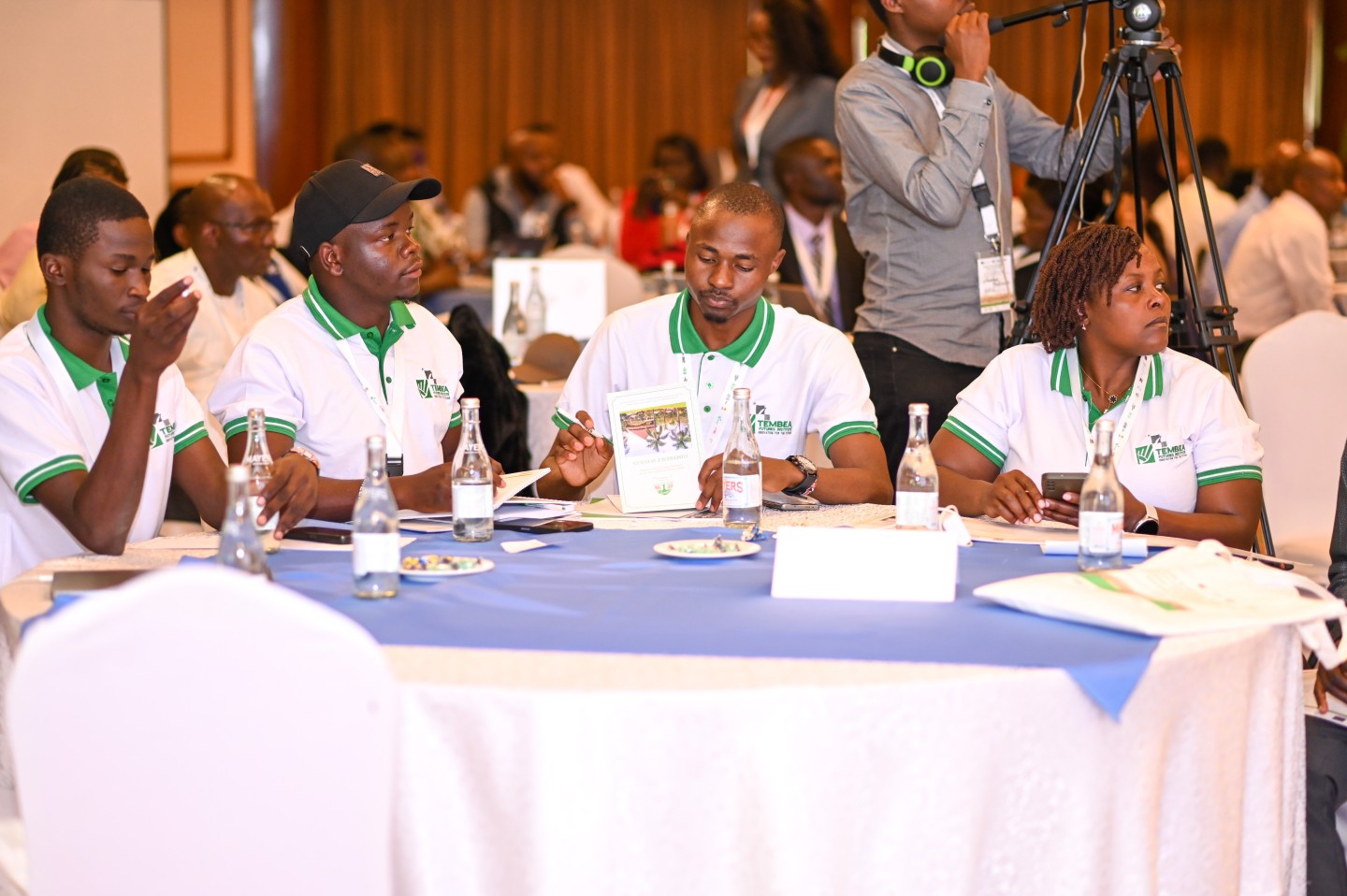
TeFI at The High-Level Bi-ennial Regional Policy Conference
Tembea Futures Institute (TeFI) proudly participated in the High-Level Bi-ennial Regional Policy Conference on Customary Tenure Rights in Eastern Africa, held at Safari Park Hotel, Nairobi, from September 29 to October 1, 2025. The conference brought together policymakers, researchers, community leaders, and development partners to discuss how land, data, and innovation can drive inclusive development and climate resilience across the region.
TeFI showcased practical, village-driven innovations that are helping communities adapt to climate change, improve food security, and strengthen livelihoods. Our focus was on how villages and students can power climate resilience through innovation and collaboration — the heartbeat of our mission.
Showcasing Local Climate-Smart Solutions
Throughout the conference, delegates visited our booth to explore climate-smart innovations rooted in community participation and youth & women leadership. We highlighted:
The use of cover crops, African leafy vegetables, and community seedbanking to restore soil health, enhance food diversity, preserve indigenous seeds, and strengthen local nutrition.
The importance of village-based financing models that help communities mobilize their own climate funds for long-term resilience.
Student engagement through apprenticeship and mentorship programs that link education to real-world environmental action.
These efforts reflect our belief that climate solutions must grow from the ground up — with local people, data, and innovation at the center.
Discussions at the conference emphasized the role of digitizing land records and adopting GIS technologies to improve governance and service delivery at the county level. Key takeaways included:
Modernized land information systems build transparency, trust, and efficiency.
GIS-based planning enhances resource allocation and evidence-driven decisions.
Capacity building remains essential — technology only works when people are empowered to use it.
However, challenges such as digital illiteracy and limited internet access persist, especially in rural areas. Counties must therefore invest in digital infrastructure, training, and legal frameworks that support inclusive and secure data management.
Expert Insights from TeFI Leadership
Our Executive Director, Ir. Buoga Jared Omondi, MSc. HSC, joined a panel discussion on the Role of Digital Tools in Land Data Management. Drawing from his research and field experience in GIS, he shared insights on:
The power of satellite imaging and GIS in improving data access and supporting pastoral development.
Bridging the gap between research and user application through practical training and workforce development.
The need to integrate local and national data into shared systems to reduce duplication and improve decision-making.
Establishing a legal framework for data sharing to ensure reliability, accountability, and trust.
His message was clear: counties and communities must embrace digital innovation, build local skills, and strengthen governance to make land data systems truly serve the people.
VillageCAN: Empowering Villages for Climate Action
TeFI’s Innovation & Acceleration Hub, represented by Maureece Olunga, presented the Village Climate Actors Network (VillageCAN) Blueprint — a flagship model that connects global climate resources to local action.
This blueprint is designed to empower women and youth as frontline climate actors and accelerate community-driven transformation through five innovation pillars:
Student Apprentice Hub (SAH) – Over 700 students and 25 Village Climate Investment Groups (VCIGs) linking knowledge with real impact.
Skilling-as-a-Service (SaaS) & Data Science Bureau – Turning youth skills into professional opportunities in data, agritech, and climate innovation.
Loyalty-as-a-Service (LaaS) – Through the Uhai-App, communities turn daily savings and consumption into climate financing.
VCIGs – 100 households per group mobilizing their own funds for food forests, climate insurance, and green social enterprises.
Innovation Hubs – Connecting students, researchers, and entrepreneurs to co-create and scale sustainable local solutions.
From Villages to Regional Policy
TeFI’s participation demonstrated how local innovation can shape regional policy and how students and villages can drive Africa’s climate future. By connecting data, technology, and grassroots action, we are building a future where climate resilience starts at home — in our villages, our schools, and our youth-led enterprises.
We extend our gratitude to all partners, delegates, and friends of climate action who visited our booth and shared in our vision. Together, we are proving that the path to a sustainable future begins with empowered communities.